MAGAZINIX Opinion
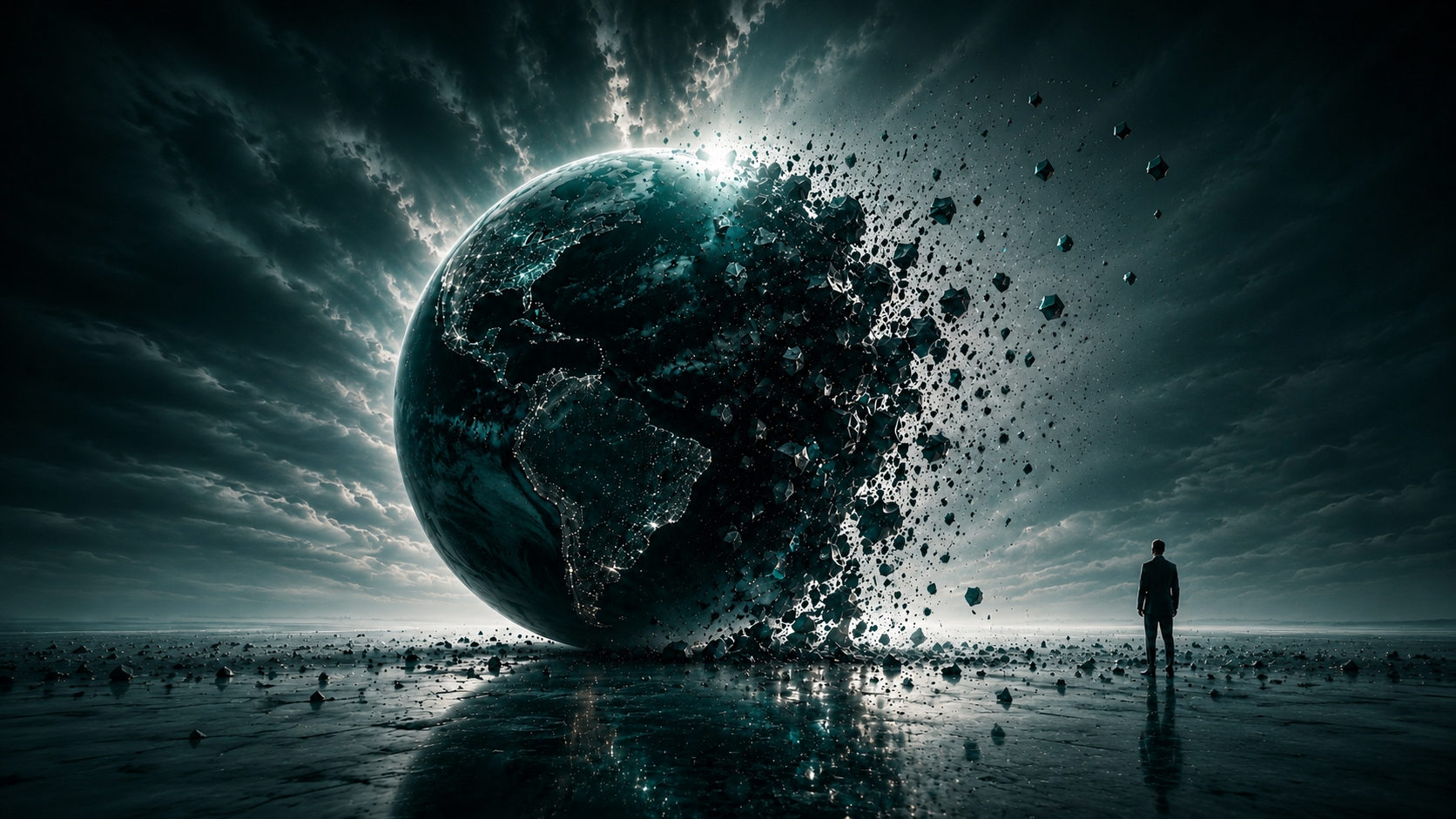
The World Is Moving.
And Most People Don't Notice Until It's Too Late.
By Virginia "Gin" Schmidt — an essay on ownership, trust, and the quiet transformation happening beneath our lives.
Author
Virginia "Gin" Schmidt
Category
Opinion
Published
21 July 2026
Chapter
Signature
Reading time
12 min
Prologue
In Hindsight
There are moments in history that only become obvious in hindsight. The printing press. Electricity. The internet. At the time, they looked like inventions. Years later, we realized they had quietly rewritten society.
I believe we're living through another one of those moments.
Not because of artificial intelligence. Not because of blockchain. Not because of robots, quantum computing, or whatever technology dominates this week's headlines.
But because, for the first time in decades, the rules beneath our lives are changing. Quietly. And while most people are looking at the technology, the real transformation is happening underneath it.
"Every generation believes it is living in normal times. History disagrees."
For years, we measured success through visibility. Followers. Likes. Views. Algorithms. Reach became currency. Attention became business. We learned how to optimize ourselves for platforms we never actually owned.
We built audiences we couldn't take with us. We invested thousands of hours creating value inside ecosystems that could change overnight — with a single policy update, a new algorithm, or a platform deciding our work no longer mattered.
Looking back, it almost feels normal. It wasn't. We simply accepted it because everyone else did.
Today, I see the world differently. Not only as an entrepreneur. Not only as the founder of XINI8. Not only as someone who spends every day building at the intersection of artificial intelligence, media, and emerging technologies. But as a mother.
Because every innovation eventually becomes someone else's normal. Every decision we make today becomes the world our children inherit tomorrow. That realization changed everything for me.
I no longer wake up asking, "What's the next big technology?" Instead, I ask myself something much more important. What kind of world will my son inherit?
That single question has quietly become the compass behind almost everything I build. Not because I believe technology will save us. But because I know it will shape us. And shaping the future has never been the responsibility of technology alone. It has always been the responsibility of people.
Chapter I
A Quiet Revolution
The biggest revolutions rarely begin with fireworks. They begin with silence. One decision. One invention. One shift in perspective.
Most people imagine revolutions as dramatic moments. History tells a different story. The Industrial Revolution didn't begin the day factories appeared everywhere. The Internet didn't change the world the day the first website went online. Change accumulates quietly before it suddenly feels inevitable.
That's exactly where we are today. Artificial intelligence didn't create this shift. It accelerated it. Blockchain didn't invent ownership. It challenged how ownership works in the digital world.
Technology isn't changing humanity. It's exposing the questions we've been avoiding for years. Questions about trust. About identity. About work. About value. About who actually owns what we create. And perhaps the biggest question of all: What does it mean to build something that truly belongs to you?
"Artificial intelligence changed the speed. Human intelligence still decides the direction."
For decades, we lived inside an internet designed around platforms. We created profiles. Collected followers. Published content. Built businesses. Sold products. Started communities. But very few of us ever stopped to ask a simple question. Who actually owned the ground we were building on?
Imagine spending twenty years constructing your dream house. Every brick placed with care. Every room designed exactly as you imagined. Then one morning someone knocks on your door. "I'm sorry," they say. "We've changed the rules. The house stays. You leave."
Sounds absurd. Yet millions of businesses experience exactly this every single year. An algorithm changes. Organic reach disappears. A platform gets sold. An account is suspended. Years of work suddenly depend on a decision made by someone you've never met.
We've normalized dependence. We even gave it attractive names. Growth. Optimization. Engagement. But dependence is still dependence.
Chapter II
The Illusion of Ownership
Perhaps the greatest illusion of the digital age wasn't social media. It was ownership. We believed we owned our audience. We rented it. We believed we owned our visibility. We borrowed it. We believed we controlled our businesses. Many of us simply learned how to perform well inside someone else's system.
There is nothing wrong with platforms. They changed the world. They connected billions of people. They created opportunities previous generations could never have imagined. But they were never meant to become the final destination. They were the bridge. Not the future.
Let me ask you something. If every platform you use today disappeared tomorrow — what would still belong to you? Your ideas? Hopefully. Your experience? Absolutely. Your relationships? The genuine ones, yes. Everything else? That answer is probably more uncomfortable than we'd like to admit.
Technology has taught us to move faster. But it hasn't necessarily taught us to build deeper. We're producing more than ever before. More content. More meetings. More notifications. More opinions. More noise. And yet clarity has become one of the rarest resources on Earth. Because information is no longer scarce. Attention is.
"The future won't belong to the loudest people. It will belong to the clearest thinkers."
Chapter III
AI Didn't Replace People
Let's address the question everyone seems obsessed with. Will AI replace us? I don't think that's the right question anymore.
Artificial intelligence is extraordinary. It writes. Designs. Analyzes. Translates. Plans. Builds. It works twenty-four hours a day without asking for a vacation. And tomorrow, it will do even more.
But here's what fascinates me. The more capable AI becomes, the more valuable something entirely different becomes. Human judgment. Curiosity. Taste. Empathy. Leadership. Vision. Trust. None of these have become less important. If anything, they've become exponentially more valuable.
Because when everyone has access to the same tools, the difference is no longer the tool. The difference is the person using it.
I often hear people say, "AI is taking over." I don't see it that way. I see people finally being freed from work that never required their humanity in the first place. The repetitive. The mechanical. The predictable.
Maybe the real opportunity isn't working faster. Maybe it's becoming more human. More creative. More thoughtful. More courageous. The future doesn't need more people competing with machines. It needs more people doing what machines never will. Thinking differently. Connecting deeply. Imagining boldly. Building responsibly. And above all — remaining unmistakably human.
Chapter IV
The Return of Human Value
There is something beautifully ironic about the age of artificial intelligence. The smarter our machines become, the more valuable it becomes to be human. Not perform like a human. Actually be one.
For years, we were rewarded for speed. Post first. Reply faster. Produce more. Scale everything. Automation became the goal. Efficiency became the religion. Somewhere along the way, we confused productivity with progress. They're not the same thing.
Look around. Every day, millions of images are generated. Thousands of articles are written. Videos are produced in minutes. Entire businesses are launched before lunch. The barrier to creating has almost disappeared. Which means something else becomes scarce. Original thinking. Perspective. Taste. Character. Integrity. The ability to connect ideas that nobody else thought belonged together. That has become the new luxury.
"When everyone can create, creation is no longer the advantage. Vision is."
As someone who has spent years in the film industry, I've learned something that technology keeps proving again and again. People don't remember information. They remember emotion. They don't remember specifications. They remember stories. They don't remember features. They remember how something made them feel.
Technology changes the tools. Human nature changes much more slowly. And that's why I still believe stories will outlive software. Because stories travel further than code ever can.
For decades, we optimized for attention. Today, I believe we need to optimize for trust. Attention gets you noticed. Trust gets you invited back. Attention opens doors. Trust keeps them open. Attention can be bought. Trust has to be earned. And in an economy increasingly powered by artificial intelligence, trust becomes one of the few assets that cannot simply be generated with a prompt.
"Trust isn't a feature. It's infrastructure."
Chapter V
The Most Underrated Asset
For years, we've been told that data is the new oil. Perhaps. But I think something even more valuable has been hiding in plain sight. People.
Real relationships. Not contacts. Not followers. Not email lists. People. There is a difference. A contact knows your name. A relationship knows your character. A follower might like your post. A trusted person will recommend your work when you're not in the room. Algorithms measure attention. People measure trust. One is rented. The other is earned.
If I had to build everything again from zero tomorrow, I wouldn't start with a logo. Or a website. Or even funding. I'd start with people.
Because every meaningful company, every movement, every invention, every breakthrough has always started with people choosing to believe in an idea before the rest of the world did. Technology accelerates growth. People create it.
Think about the five people who have had the biggest impact on your life. Were they software? Were they platforms? Or were they human beings who believed in you before you believed in yourself? Exactly. History has always moved through people. It still does.
Chapter VI
Building Instead of Watching
One of the greatest privileges of being a founder is that you stop looking at the world as it is. You begin looking at the world as it could become.
That doesn't mean you always get it right. Far from it. Building something teaches humility faster than success ever will. Every idea gets tested. Every assumption gets challenged. Every vision eventually collides with reality. And that's a good thing. Reality is an excellent teacher.
Building XINI8 has reminded me of this again and again. Not because every answer was obvious. Quite the opposite. Because the deeper we built, the more one lesson kept repeating itself. Infrastructure matters far more than attention.
Everyone wants the spotlight. Very few people want to build the stage. But without the stage, there is no performance. Without foundations, there are no skyscrapers. Without infrastructure, innovation remains an idea.
"The companies that shape the future rarely begin by chasing attention. They begin by solving infrastructure."
I think we've celebrated visibility for too long. Visibility is exciting. Infrastructure is often invisible. Nobody posts on social media about good plumbing. Nobody admires the concrete underneath a bridge. Yet both determine whether everything above them survives. The same is true in business. Strong foundations are rarely glamorous. But they're always necessary.
This is why I believe the next decade won't belong to those who produce the most content. It will belong to those who build the strongest foundations. For themselves. For their teams. For their communities. For the industries they serve. Because eventually every trend disappears. Every platform evolves. Every technology matures. Foundations remain.
Chapter VII
We Don't Need More Experts
This may sound controversial. But I don't think the world needs more experts. It needs more thinkers. Expertise is important. But expertise alone is no longer enough.
Knowledge has become abundant. Artificial intelligence has made sure of that. Today, almost anyone can access extraordinary information within seconds. Knowledge is no longer the competitive advantage it once was. Judgment is. Knowing what matters. Knowing what to ignore. Knowing when to act. Knowing when to wait. That cannot be downloaded. It has to be developed.
"Execution is the new education. Ownership is the new literacy."
I've watched brilliant people hesitate because they felt they needed another course. Another certificate. Another mentor. Another confirmation that they were ready. Meanwhile, someone with half the knowledge but twice the courage started building. Perfection has delayed more dreams than failure ever has.
At some point, preparation quietly becomes procrastination. There is a moment when thinking must become building. Because clarity rarely arrives before action. It usually arrives because of it.
The future won't ask who knew the most. It will ask who was willing to create. Who was willing to adapt. Who remained curious while everyone else became comfortable. And perhaps most importantly — who chose to build while others were still waiting for certainty. Because certainty has never been the requirement for changing the world. Only courage has.
Chapter VIII
The World We Leave Behind
Every generation inherits a world it didn't create. And every generation leaves behind a world it helped shape. That thought has stayed with me for years. Especially on the quiet evenings. The ones without meetings. Without deadlines. Without notifications demanding my attention. The moments when work becomes perspective.
Because if we're honest, most of us aren't really building for today. We're building for tomorrow. For people we'll never meet. For problems we may never personally experience. For children who will one day assume the world has always worked the way they find it. Just as we once did.
When I was growing up, the internet felt like magic. Today, my son simply expects it to exist. That's how progress works. Every breakthrough eventually becomes ordinary. Which makes me wonder — what will feel ordinary to his generation? Artificial intelligence? Autonomous transportation? Digital ownership? Personal AI assistants? Entire industries that no longer look anything like they do today? Probably.
But I hope something else becomes normal too. Integrity. Curiosity. Responsibility. The courage to question systems instead of blindly accepting them. Because technology should never replace our values. It should amplify them.
"The greatest legacy we leave behind won't be our technology. It will be the values embedded inside it."
Chapter IX
A Different Definition of Success
For a long time, success was measured in numbers. Revenue. Followers. Market share. Awards. Titles. Growth. None of these are wrong. I've celebrated many of them myself.
But over time, something shifted. I stopped asking, "How big can this become?" And started asking, "How meaningful can this become?" Those are very different questions. One is driven by scale. The other by impact. Scale impresses people. Impact changes them.
I've met founders with extraordinary businesses who quietly felt empty. I've met artists with small audiences whose work transformed lives. I've met parents building companies while simultaneously building human beings. That may be the hardest startup any of us will ever create. And perhaps the most important. Because businesses can fail. Products evolve. Industries disappear. But the values we pass on continue long after we're gone.
Chapter X
Ownership Is More Than Technology
People often hear the word ownership and immediately think about assets. Money. Shares. Property. Wallets. Tokens. But ownership begins long before any of those. Ownership begins with responsibility.
Owning your decisions. Owning your mistakes. Owning your future instead of outsourcing it to someone else. Owning your learning. Your mindset. Your time. Your attention. Because attention is ownership too. Every minute you invest is a vote for the future you're creating. Whether you realize it or not.
Let me ask you one final question. If someone looked only at your calendar, would they understand what truly matters to you? Not what you say matters. What actually matters. Because time never lies.
"Your attention is the most honest investment portfolio you'll ever own."
Chapter XI
The Builders
Throughout history, there have always been two kinds of people. Those who wait for change. And those who quietly begin building before everyone else notices.
The builders rarely look extraordinary at first. They're often misunderstood. Sometimes underestimated. Occasionally ignored. History has a habit of correcting that later. Because builders don't chase applause. They solve problems. They connect people. They improve systems. They leave things better than they found them.
I've always admired those people. Not because they were fearless. But because they kept building anyway. Fear and courage have always existed together. The difference is simply which one gets to make the decision.
We don't need everyone to become founders. Or filmmakers. Or engineers. Or investors. The future isn't asking us to become the same. It's asking us to contribute from wherever we are. Teachers. Designers. Doctors. Developers. Parents. Writers. Craftsmen. Scientists. Artists. Entrepreneurs. Every meaningful future has always required different minds working toward something larger than themselves. Progress has never been a solo project.
Chapter XII
The Quiet Advantage
I sometimes think the greatest advantage today isn't intelligence. It isn't money. It isn't even technology. It's perspective. The ability to step back while everyone else speeds up. To recognize patterns instead of chasing headlines. To think in decades while the world refreshes every few seconds.
Perspective creates clarity. Clarity creates better decisions. Better decisions create better futures. Perhaps that's the real competitive advantage. Not knowing more. Seeing differently.
"Technology gives us more options. Perspective helps us choose wisely."
Chapter XIII
The World Is Already Moving
Whether we participate or not, the world will continue moving. Artificial intelligence will keep evolving. New industries will emerge. Old ones will disappear. Children born today will inherit realities we can barely imagine.
That isn't something to fear. It's something to prepare for. Not by predicting every innovation. That's impossible. But by developing principles strong enough to navigate whatever comes next. Because principles survive trends. Character survives disruption. Curiosity survives uncertainty.
If there's one thing I've learned through building companies, producing films, working with emerging technologies, and raising a son, it's this: the future isn't built by people who think they have all the answers. It's built by people who keep asking better questions. Who remain curious. Who stay humble. Who continue learning long after everyone else believes they've already arrived.
Maybe that's what leadership really is. Not standing above others. But remaining willing to grow alongside them.
Coda
The Beginning of a Conversation
So where does that leave us? Not at the end of a conversation. At the beginning of one. Because this article isn't really about artificial intelligence. Or blockchain. Or entrepreneurship. Or even the future.
It's about us. About the choices we make while history quietly unfolds around us. About the kind of people we decide to become while the rules are being rewritten. About understanding that technology may shape the tools — but humanity still shapes the direction.
"History rarely announces itself. It simply moves."
And perhaps that's the most important thought I'd like to leave with you. The world is already moving. You can feel it. You can see it. Maybe you've sensed it for a while without being able to explain why. Trust that feeling.
Stay curious. Ask better questions. Build things that matter. Invest in people. Protect your integrity. Create more than you consume. And never underestimate the quiet power of a single idea, pursued with consistency over time.
Because the future won't be built by those who waited until everything was certain. It will be built by those who chose to move while the world was still finding its direction.
The world is moving. The only question left is — are you moving with it?
— Gin