MAGAZINIX Cover Story
The Cinematic Architect.
A Fifty-Year Legacy of Vision, Innovation, and the Business of Believing in Movies.
By Dr. Haina — On John Shaw, and the quiet architects who shape how films find their audiences.
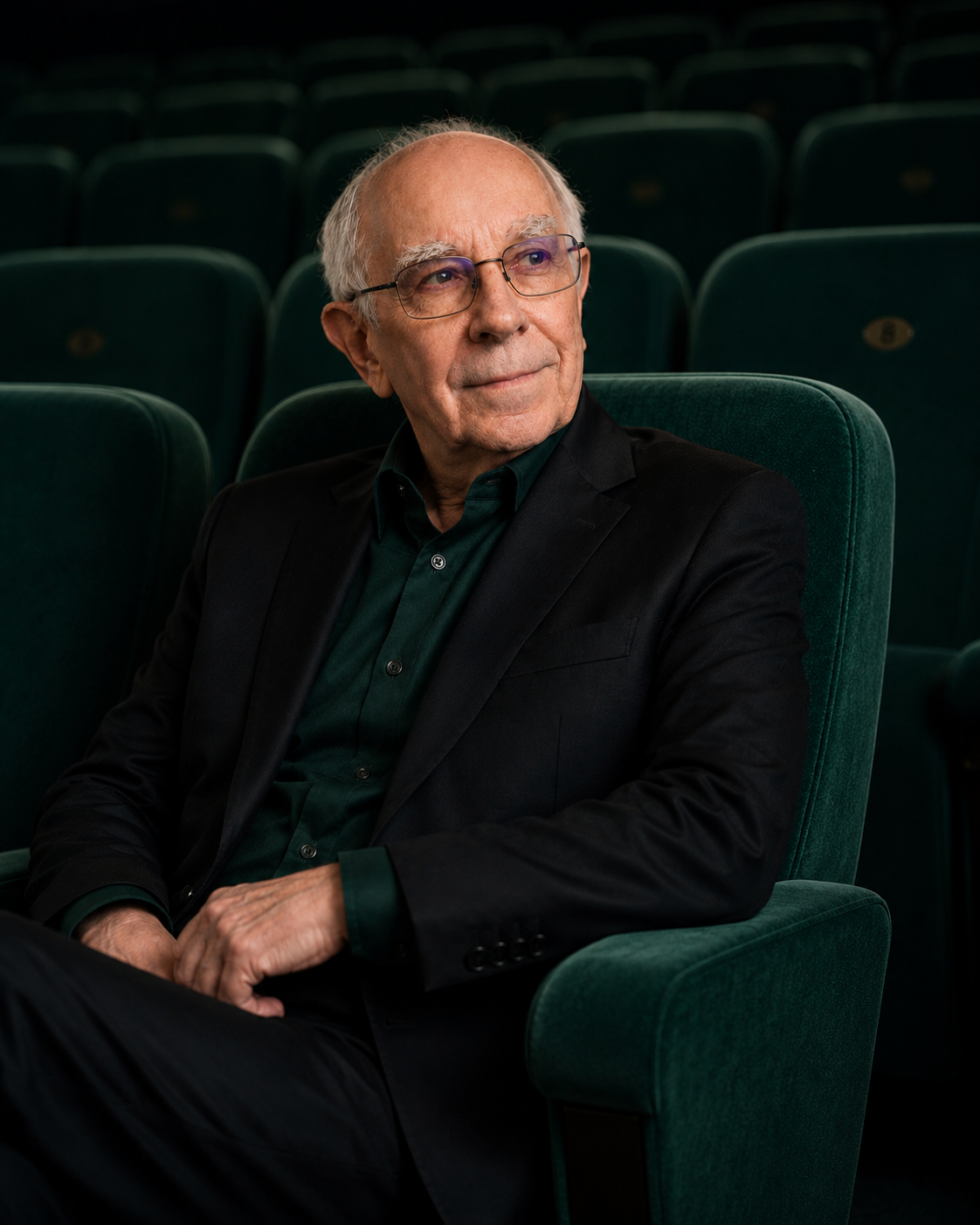
Portrait
John Shaw
Location
Texas, USA
Feature
No. 01
Chapter
People
Reading time
24 min
“Great films don't find audiences by accident. They find them because someone believed in them long before everyone else did.”
Prologue
Before the Algorithms
Before streaming platforms reshaped the entertainment landscape. Before artificial intelligence began influencing the way stories are discovered. Before algorithms, predictive analytics, and opening-weekend dashboards became the industry's daily language — there were people whose decisions quietly determined whether a film would ever find its audience.
They weren't the faces on the movie posters. They didn't walk the red carpet. Their names rarely appeared in headlines. Yet behind countless successful releases stood professionals whose vision, instinct, and understanding of audiences shaped the course of modern cinema.
John Shaw is one of those people.
For more than five decades, he has helped connect filmmakers with audiences, ideas with opportunity, and stories with the people waiting to experience them. His career spans one of the most remarkable periods in entertainment history — from the final years of Hollywood's classic studio era to today's rapidly evolving landscape of streaming, analytics, artificial intelligence, and decentralized technologies.
“Some careers follow the evolution of an industry. Others quietly help define it.”
Chapter I · 1968–1972
The Beginning of an Extraordinary Journey
John Shaw's story began in 1968, when he joined 20th Century Fox Film Corporation in Denver as a Student Booker. At the time, the business of film distribution looked very different from today. There were no digital dashboards, predictive algorithms, or real-time audience metrics. Success depended on market knowledge, trusted relationships, intuition, and countless hours of meticulous planning.
Shaw demonstrated an uncommon understanding of both the commercial side of filmmaking and the audiences who ultimately determined a film's success. His ability to recognize opportunity, combined with a disciplined approach to the business, earned him a promotion to Head Booker within just two years.
Among the projects that shaped this period was Butch Cassidy and the Sundance Kid, where Shaw contributed research supporting the film's release strategy. Shortly afterwards, he became part of the team involved in planning the theatrical distribution of Francis Ford Coppola's The Godfather — a film that would forever redefine the language of modern cinema.
For many professionals, participation in projects of this magnitude would represent career highlights. For John Shaw, they marked only the beginning.
His growing reputation led him to Paramount Pictures in Los Angeles and Beverly Hills, where he served as Sales Manager and Head Booker. Soon after, Shaw crossed another important boundary by moving into theatrical exhibition as a Film Buyer for Commonwealth Theatres in Kansas City. Few professionals gain firsthand experience inside both the studio system and the exhibition world. Fewer still master both.
Chapter II · 1973–1985
Seeing Opportunity Where Others Saw Risk
In 1973, Shaw relocated to Texas, joining McClendon Theatres in a market that rewarded bold thinking and an exceptional understanding of audiences. It was there that his ability to identify opportunity before it became success truly began to distinguish him.
One defining moment arrived when Shaw negotiated with filmmaker Tobe Hooper to book the original The Texas Chain Saw Massacre for a test engagement in Houston. At the time, few believed the independent production would leave a lasting mark on cinema. The successful theatrical launch helped ignite what would become one of the most influential horror franchises ever created.
“It was never about taking risks for the sake of risk. It was about recognizing potential before everyone else could see it.”
As Head of Domestic Distribution for Mulberry Square Productions, Shaw guided the national release strategy for the beloved Benji films, proving that thoughtful distribution could transform family entertainment into remarkable commercial success.
In 1979, long before Mel Gibson became an international star, Shaw accompanied the young Australian actor throughout Texas during test screenings of Mad Max. Audience reactions were carefully observed, viewer behaviour analysed, marketing strategies refined. Looking back today, those screenings marked the American introduction of an actor who would soon become one of the defining faces of modern cinema.
Only a few years later, in 1984, Shaw organised and managed the world premiere of Blood Simple, the debut feature from two relatively unknown filmmakers named Joel and Ethan Coen. The film remained in theatrical release for sixteen weeks under his guidance.
Some people discover success. Others help create the conditions that allow success to happen. John Shaw quietly did both.
Chapter III · 1988–2010
Building the Information Age of Film Distribution
The late twentieth century introduced a new reality for the entertainment industry. Information was becoming as valuable as instinct. Long before this became industry standard, John Shaw recognized where the future was heading.
In 1988, he founded Film Booking Office Corporation, later developing what would become Movieline International — one of the industry's earliest comprehensive information and analytics platforms dedicated to theatrical distribution.
Movieline published one of cinema's earliest estimated Weekend Top 10 Box Office Reports, and pioneered the use of email distribution for delivering timely market intelligence — an innovation that significantly accelerated the flow of information throughout the theatrical marketplace.
Shaw expanded its influence through consulting work on major productions, including collaboration with George Lucas during the release of Willow and support for the distribution of Al Reinert's acclaimed documentary For All Mankind. His expertise also helped expand the reach of Hollywood Software, securing major entertainment companies — including Lionsgate, MGM, and Sony International — as clients.
In 2010, Movieline International was acquired by Peter Brown, former President of AMC Entertainment. Innovation, once again, had rewarded foresight.
Chapter IV · Leadership
Leading with Purpose
“The greatest legacy isn't measured by success alone. It's measured by what remains after you're gone.”
In Lexington, Kentucky, Shaw served as Board Member and Consultant for the Friends of the Kentucky Theatre, helping preserve one of America's historic movie palaces for future generations. Under his leadership, the theatre successfully modernized its projection and sound systems while carefully protecting the character and heritage that had made it a cultural landmark for decades.
His commitment to service has extended well beyond the film industry. Shaw has served as an Elder at Maxwell Street Presbyterian Church, and contributed to organizations including the Rotary Club and the Griffin Gate Community Association.
For John Shaw, the business has never been only about movies. It has always been about people.
Chapter V · The Next Chapter
Joining XINI8
The entertainment industry is entering another defining moment. Artificial intelligence is reshaping production. Blockchain is introducing entirely new models of ownership. Creators are seeking greater independence. Communities are becoming active participants instead of passive audiences.
Joining XINI8 is far more than another professional milestone. It represents the meeting of two generations of innovation — one built on decades of practical industry experience, the other driven by new technologies redefining how stories are financed, produced, distributed, owned, and experienced.
As Advisor at XINI8, John Shaw contributes something that cannot be generated by artificial intelligence or replicated through data alone: perspective.
For XINI8, the future is not about replacing the film industry. It is about helping shape its next evolution. John Shaw represents that bridge — between Hollywood's remarkable past, and the future that is only just beginning.
Chapter VI · Legacy
A Legacy Still Being Written
John Shaw was never simply distributing films. He was building connections — between storytellers and audiences, between creativity and commerce, between tradition and innovation.
From silent films to sound. From black and white to colour. From analogue to digital. From theatrical exclusivity to streaming. And now: artificial intelligence, blockchain, decentralized ownership. Every generation believes it is witnessing the industry's greatest transformation. Few people have actually lived through nearly all of them. John Shaw has.
His perspective reminds us that while technology constantly changes, the foundation of great storytelling never does. People will always seek stories that move them. Communities will always gather around meaningful experiences. And innovation will always belong to those willing to adapt without forgetting where they came from.
Editor's Note
Not every architect builds with concrete.
Some build industries. And some build the future.
Some careers are measured by awards. Others by titles. Others by financial success. John Shaw's career is measured differently. It can be found in the films that reached audiences. In the innovators he believed in before the world knew their names. In the systems he helped modernize. In the relationships he built.
As MAGAZINIX explores the future of media, technology, creativity, and human innovation, stories like John's remind us that progress is rarely driven by those seeking recognition. It is driven by those quietly creating the conditions for others to succeed.
— Dr. Haina, Editor
Career Highlights
A lifetime in film,
chapter by chapter.
- 1968
20th Century Fox
Student Booker, Denver — promoted to Head Booker within two years.
- 1970s
Paramount Pictures
Sales Manager & Head Booker, Los Angeles and Beverly Hills.
- 1973
Commonwealth Theatres
Crossed into exhibition as Film Buyer, Kansas City.
- 1974
The Texas Chain Saw Massacre
Negotiated the Houston test engagement that helped ignite the franchise.
- 1977
Benji
Head of Domestic Distribution for Mulberry Square Productions.
- 1979
Mad Max
Toured Texas test screenings alongside a young Mel Gibson.
- 1984
Blood Simple
Early theatrical champion of the Coen Brothers' debut.
- 1988
Film Booking Office
Built one of the industry's first modern booking operations.
- 1990s
Movieline International
Pioneered the Weekend Top 10 and email-delivered market intelligence.
- Today
Screendollars
Communications Director & Head of Business Development.
- Today
XINI8
Advisor — connecting five decades of instinct with a new generation of technology.
“The greatest impact isn't always made by those standing in front of the camera. Sometimes it's made by the people who make sure the world gets to see the story.”
Editor's Choice
Why we chose John Shaw for Issue No. 01
John Shaw's story is not simply about a remarkable career. It is about curiosity, patience, relationships, innovation and a lifetime spent helping great stories reach the people they were meant to inspire.
As MAGAZINIX explores the future of media, creativity and technology, we believe the future becomes more meaningful when it is built upon people who helped shape the past.
Editor · Dr. Haina